|
|
Wholesale Bamboo Plant Nursery and |
Specialising in non-invasive clumping bamboo plants
We have the best quality non-invasive bamboo plants and poles for sale in north Queensland. We keep a large stock of bambusa textilis VAR gracilis slender weavers bamboo, the most popular screening bamboo in Australia. To buy non-invasive bamboo plants and poles for a bamboo screen on this site please email a purchase order with all of your details to bamboman@bigpond.net.auBamboo Hedging and screening
For information on the best wholesale clumping Bamboo plants for hedging and privacy screens
screening in north Queensland Australia browse this site. Bamboo screens in potsThe right Bamboos in large pots is a good mobile screen for you deck or aroundyou swimming pool, move them to where you need them. Bambusa ventricosa Budda Belly, Bambusa ventricosa Kimie yellow Buddy Belly and Bambusa vulgaris wamin Buddy Belly are the best Bamboos to grow in pots. Other species will also grow in pots, but will need a lot of care.Please view my FAQs pages for tipps on caring for your bamboos in pots. Hedging with bamboo is a smart alternative to fencing and walls. We can supply a variety of species. Young plants in 200mm pots work out very inexpensive and you can watch your hedge grow. You could share the cost with your good neighbour We grow bamboo in 200mm pots and up to 400 litres bags the most popularBamboos. We supply plants and Bamboo poles to landscapers and developers and On demand Bamboo Whitsunday can organise creative bamboo workshops for people who are interested in learning about the many uses of bamboo.
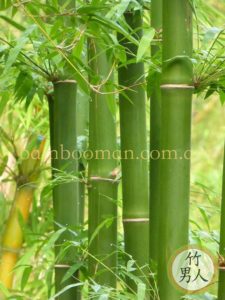
Live in an earthquake zone or building in an earthquake area? Then you need to consider building a shelter with bamboo or re-inforcing with bamboo. Our garden design and principlesWe are an eco friendly permaculture designed garden and Bamboo nursery.We use no pesticides or herbicides on our potted plants or in the 2 hectares of garden. For pest control and to turn the leaf litter we have over 100 Malay Fowl. game chickens free ranging in the garden. Malay games are very quite birds. They can grow to almost 1 meter tall and 6 ½ Kilos in weight. The world’s largest chicken. We also use stable manure to mulch our inground plants> For an excellent paper on building a bamboo farm read this Grow a bamboo farm link Erosion control with clumping bamboo plants80% of a non-invasive clumping bamboo plants roots are in the first 200mm of soil. A 10m high plant 3 years old will have matt of roots in a 10m in diameter area around your bamboo plant.The network of bamboo rhizome's will also hold your lands soil together. Planting clumping bamboo plants on your steep land or creek banks or in your parklands or farm will control erosion . It will hold your soil together just like a large grass would. But has a lot more practical uses . General information about Bamboo:Bamboo are found in all tropical and sub-tropical regions of the world especially in Asia and South America.In the Philippines they grow in all parts of the archipelago, such as on the shores, plains, forest, hillside and mountains. Bamboo is one of the most common materials used in house construction, furniture-making and in manufacturing other useful materials. The stems or culms of bamboo are cylindrical and generally hollow and separated by partitions into joints. These partitions are known as nodes. Thickness of the culms and the length of the internodes vary greatly in different species. The space between nodes is called internodes. Shoots are generally developed at the beginning of the rainy season. The young shoots grow very rapidly and reach their full growth in height and thickness. In most species the plant assumes a featherly appearance. The culms are not considered mature until their branches are fully formed. The number of shoots produced yearly from each clump of bamboo varies with the vigor of the individual plant and the habits of the species. The mature age of most species is considered to be 30 years. The larger species produce 12-20 culms and the smaller ones 30-50 culms. Some species of bamboo have larger leaves and others small ones, but variations in the size of the leaves may occur in some clumps and species of bamboo. Neither size, shape or the number of veins in the leaf can be taken as invariable. Many species of bamboos bear flowers once and then die. Some flower after a great interval of time. The flowers usually appear only after the bamboo is full leaf and in the majority of cases, the leaves drop off as the inflorescence continue to form. The flowers may cover the branches or only the bracelets. They may be few or very numerous. Historical background - Plants for every season"Vigorous, versatile and stunningly stylish: that's bamboo. In the steaming jungles of Borneo, Dayak headhunters use it to carry water.In Peking restaurants, they fry it. In Kyoto and Bangkok, nimble-fingered craftsmen fashion it into fan flutes and a thousand and one other lovely things. In the United States, Manhattan decorators use it to trim elegant flats. It is all things to all men. It is bamboo, the world's most wonderful wood. In the west bamboo may still be thought an exotic plant, but in the east, for halt the human race, it is a necessity. "It's almost unthinkable what we would do without bamboo," remarks Thanom Sivichai, a Thai village headman. His house is built of bamboo. He eats fried bamboo shoots and stores his rice in a bamboo bin. "My bamboo cart has bamboo shafts," he says. Cheap, abundant, ever reliable, bamboo is also flexible and splendidly durable. By any yardstick, it has a matchless pedigree of virtues, the wood with innumerable uses. Peerless in so many ways, bamboo has life habits that are enthrallingly eccentric. It grows faster than anything else on earth. At times, it is actually possible to see it grow more than four feet in one day. In size, bamboo can range from a twig, barely three inches tall, to the 15-foot Arundinaria Japonica, popular in British gardens, to a climber that thrusts more than 110 feet skywards: from slender branches of Sasa one-tenth of an inch across, to hulking seven-inch-wide pillars of Madake. The Bambusoideae family boasts a formidable 1250 species. But, contrary to popular belief, bamboo is not a tree, but a grass. As one expert quips, "Bamboo is a grass, which has the audacity to be a tree." So different is it from other flora, that it even enjoys special terminology. Instead of "trunk", which is solid, botanists apply the word "culm" which defines bamboo's hollow stem and characteristic joints. Moreover, "roots" and "shoots" are supplemented by the "rhizome" which connects the fertile network of underground shoots from which new sprouts grow, each with their own small roots. The Bambuso ideae clan grows most abundantly in the Orient where it is a native to China, India, Japan and all of Southeast Asia. It is also indigenous to the Americas and parts of Africa. Strangely, no plants grew in Europe, Canada or the vast reaches of Eurasia until the first shoots were transported thousands of miles and carefully transplanted. The first hardy bamboo was introduced to Europe in 1827 and 28 years later to Britian. Three of Bamboo's distinctive qualities are its enormous vigor, vitality and fertility; so the transplanted sprouts flourished. Bamboo thrives in a benign subtropical climate, but cheerfully survives frost, ice, even snow. In Japan's northern island of Hokkaido, for instance, grassy plains of Sasa prosper in icy winds blowing from Siberia. In hot, humid Jamaica, on the other hand, bamboo stakes are planted to prop up some two million yam vines proliferated into an impenetrable jungle in less than three years. Bamboo draws its immense vitality from its roots. Through this dense, intricate cobweb, just below the soil, every grove of bamboo is directly interlinked. Like a human family, every stem, shoot and rhizome is connected not only by parentage, but by this common growing network.And this umbilical cord allows the entire family unselfishly to share its food and water and to propagate with no end. Or almost. For in some genera, such as the delicate Phyllostachys, the flowers may herald the plant's death. Nobody knows exactly why or when the tragedy will occur. Even before the flowers come, the old leaves fall. The young leaves that are left are never enough to satisfy the plant's thirst and hunger, and so the bamboo dies. As does the life sustaining rhizome. Luckily, however, such bamboos break into flower only rarely, as seldom as every 12, even 100 years depending on the species. First one single plant flowers then, within a year, the whole grove burst into bloom. The small flowering sheaths vary from white and green to gold and mauve. Most bamboos flower simultaneously over a whole area. Early in 1973, for example, Japan's ubiquitous Madeke bloomed across the whole country. HUMAN NATURE. Bamboo also shares some uncanny parallels with our own world. Since young culms grow so swiftly, the "mother" stem stores nourishment in her own rhizome to feed her children. Like human parents, the "mother" bamboo passes on her own "genetic" traits. If bamboo farmers want large culms, they choose tall, thickset "mothers"; if they want small, delicate culms, it's vice versa. Young culms can be also readily molded in early months. Growing stems can be forced into frames to produce square, long, even triangular lengths of bamboo. Bamboo's practical uses are unequaled, yet this evergreen also plays a more significant role. Bamboo is sumptuously intertwined with the roots of oriental culture, with its legends and history, its poems, paintings and scholarship. In the mists of prehistory, for instance, China already honored bamboo as one of the revered Four Gentlemen: the orchid, the plum tree, the chrysanthemum....and the bamboo. Wise men acclaimed these four as mystical, even heavenly powers. Bamboo also held pride of place among the Three Friends (along with the plum and the pine). Bamboo symbolized the divine Buddha; the others personified the philosopher Confucius and Lao Tzu. As a group, they represent the three most influential thinkers in Chinese history and were universally accepted as the symbols of happiness and good fortune. Even in Mao's China, this belief still holds. The earliest wooden sculptures of bamboo were fashioned in the Sund dynasty (A.D. 969-1279), while the art of calligraphy (handwriting) might never have developed without the bamboo brush. Yet it is in China's great world of painting that bamboo reigns supreme. The earliest scrolls were made from bamboo paper and hung from weighted bamboo tubes. As a subject, it has no rival. Over 200 years, it has been painted more often than any living thing beside man himself. In the orient, bamboo also played a crucial role in the origins of science and technology. There might have been no bridges, big or small in the Far East without bamboo, even today, tough bamboo cord is used for cables and split bamboo for planks in countless swaying suspension bridges. On the Yangtze River, teams of 300 men or more still haul huge, wooden barges and lighter boats over rapids of Szechaewan using quarter-mile-long bamboo tow ropes that can stand a strain of 10,000 pounds to the square inch, ropes that never fray against the rocks. For, as the experts know, bamboo has the tensile strength of iron. It even survived the atomic bomb at Hiroshima. Green shoots were found at the epicenter. The catalogue of bamboo's virtues also includes its extensive role in Chinese and other Oriental medicine. Although a few tropical shoots are poisonous, many venerable, centuries-old remedies are still used today. In the Middle Ages, for example, a mysterious nostrum known as tabasheer, secreted from bamboo joints, traveled all the way from India to Europe, where credulous yeomen claimed it counteracted all poisons. The scientific Victorians dismissed the idea, but a few years ago research chemists found certain culms do indeed contain a fine, white powder of pure silica, an agent widely used to stop toxins spreading. SIDE PRODUCTS. More recently, Japanese scientists have extracted myriad new technical uses from bamboo. They've developed a vegetable hormone that boosts the growth of vines, shrubs and fruit trees, a controversial cancer drug, a solution that aids the culture of bacteria and a chemical that preserves food and deodorizes fish. In the West, meanwhile, researches have managed to cull liquid diesel fuel from bamboo, while others now strongly promote it as a cattle fodder. As can be seen, bamboo is all things to all men. Stirring in a storm, soothing in repose, it can spark the emotions just as quickly as the mind. Upright in its straightness, flexible in its pliancy and redoubtable in its strength, bamboo is gifted with all the qualities of the perfect parent. As practical as the wheel, and as useful as the cave-man's first stone adze, the bamboo brings together a tantalizing and unique mircocosm of talent, aesthetics and plain charm. It is quite simply, peerless. enjoy your Bamboo Plants
|
|